Focus on carbon equipment
Focus on carbon equipment


In an era where rural revitalization and green development intertwine, the rise of the rice husk carbonization industry acts as a clever golden thread, connecting scattered agricultural resources, environmental needs, and economic growth points, weaving a beautiful picture of a circular economy in rural areas. Rooted in the most common byproducts of vast rural areas, it has pioneered a path to a win-win situation for both ecological and economic value.
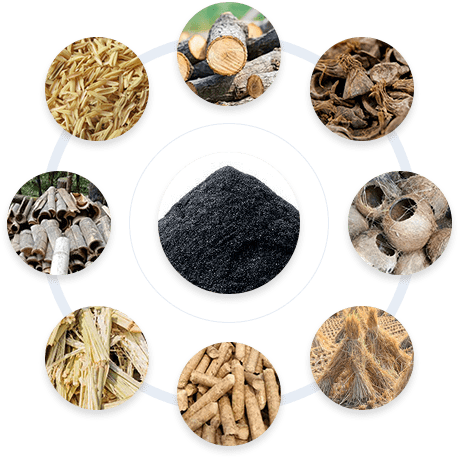
The foundation of this industry lies in a deep understanding and efficient utilization of local resources. Rice husks, a large waste product generated after rice processing, were previously a burden to handle. The intervention of the carbonization industry instantly reversed this situation, transforming the "burden" into a "raw material." It not only solved the problem of piling up waste and eliminated the pollution hazards of indiscriminate burning, but also created a small but beautiful endogenous industrial opportunity for rural areas at the source.

With the rice husk carbonization machine as its core, its operation does not require a complex industrial chain or long-distance raw material transportation. It can be set up near rice-producing areas, achieving short-distance connection between production and consumption. The produced biochar can be directly returned to the fields, nourishing local soil, improving soil quality, and promoting the quality of agricultural products. It can also be used as a substrate and adsorbent, broadening its application areas and creating more market value. This forms a highly resilient micro-circular economy.
The benefits of this industry are multi-dimensional. Environmentally, it sequesters carbon, reduces emissions, and improves soil, making a tangible ecological contribution. Economically, it creates new jobs and income streams, improving the overall efficiency of agriculture. Socially, it enhances the self-transformation capacity of rural resources, giving rural industries a new green connotation.
Therefore, the rice husk carbonization industry is far more than just the promotion of a machine; it is an inspiration for a development model. It symbolizes that rural industries can start from their own resource endowments and achieve self-enhancement and sustainable development through green and circular methods, becoming a solid and hopeful bridge connecting traditional agriculture with a modern future.
Activated carbon equipment is playing an increasingly vital role in the production of high-performance carbon materials, yielding significant economic and environmental benefits.
Horizontal carbonization furnaces are widely utilized in the charcoal industry, primarily for processing woody raw materials into high-quality charcoal.
The continuous carbonization machine is becoming an essential piece of equipment in modern biomass processing industries.
We are delighted to announce that Dingli Group will be participating in the upcoming PalmEX to be held in Jakarta, Indonesia.