Focus on carbon equipment
Focus on carbon equipment



As the volume of accumulated agricultural and forestry waste continues to rise, effective disposal methods have become a focal point of global concern. Continuous carbonization equipment is emerging as a reliable solution, capable of processing biomass waste in a manner that is both highly efficient and environmentally friendly.

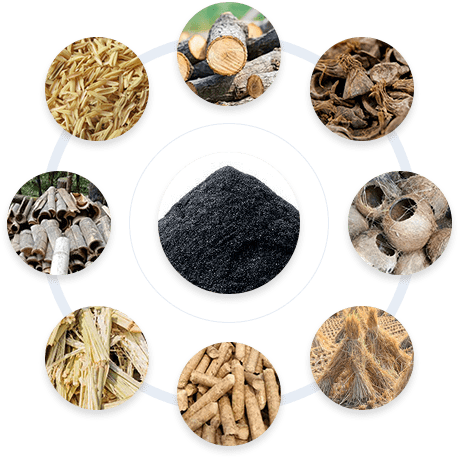
This advanced system is specifically designed to process a wide variety of biomass materials, including straw, rice husks, sawdust, coconut shells, and palm kernel shells. Through a high-temperature pyrolysis process conducted under oxygen-limited conditions, these waste materials are transformed into high-value biochar, thereby avoiding the fate of being directly incinerated or indiscriminately discarded.
The equipment integrates drying, carbonization, and cooling processes into a single, complete production line, ensuring both operational stability and product uniformity. Combustible gases generated during the process can be recovered and utilized as fuel, thereby reducing energy consumption while simultaneously minimizing exhaust emissions.
By converting biomass waste into useful carbon-based products, continuous carbonization equipment not only helps to mitigate environmental pollution but also promotes the sustainable utilization of resources, thereby providing strong support for the development of a circular economy.
The Charcoal Briquette Production Line is a complete solution for converting biomass charcoal powder into high-quality charcoal briquettes for BBQ, shisha, and industrial fuel applications. The production line integrates multiple processing stages to prov
The Biomass Carbonization Machine is an advanced thermal processing system designed to convert various biomass wastes into high-quality biochar and biomass charcoal through controlled carbonization. It can process a wide range of raw materials, including
The Biomass Carbonization Machine is specially designed for converting wood sawdust, wood chips, wood shavings, and other woody biomass waste into high-quality biomass charcoal and biochar. It provides an efficient solution for the resource utilization of
With the growing global demand for high-quality activated carbon in water treatment, air purification, food processing, and industrial applications, coconut shells have become an ideal raw material due to their high carbon content, low ash content, and ex