Focus on carbon equipment
Focus on carbon equipment



Activated carbon equipment plays a pivotal role in maximizing the utilization of biomass resources, enabling the conversion of low-value raw materials into high-value industrial products. As industries worldwide increasingly prioritize sustainable development and the efficient use of resources, this technology offers a viable pathway for transforming waste into valuable assets.

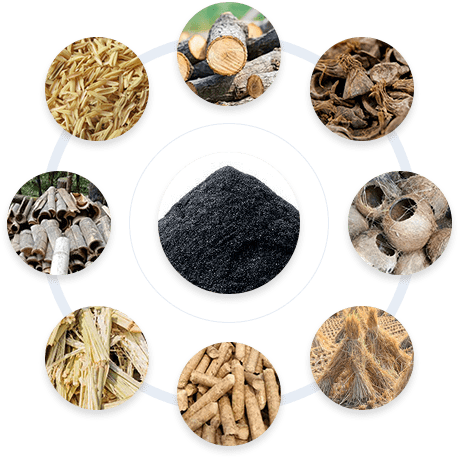
Biomass materials—such as coconut shells, sawdust, bamboo, and agricultural residues—are widely employed as raw materials for activated carbon production. Through carbonization and high-temperature activation processes, these materials develop highly porous structures, endowing them with exceptional adsorption capabilities. From a resource utilization perspective, this process not only reduces reliance on non-renewable resources but also significantly enhances the economic value of biomass waste. Furthermore, the internal recovery and recycling of thermal energy and combustible gases within the system further boost energy efficiency and lower overall production costs.
By converting abundant biomass resources into activated carbon products for which there is strong market demand, this equipment robustly supports sustainable industrial development and drives the utilization of natural resources toward a more efficient and circular model.
The Charcoal Briquette Production Line is a complete solution for converting biomass charcoal powder into high-quality charcoal briquettes for BBQ, shisha, and industrial fuel applications. The production line integrates multiple processing stages to prov
The Biomass Carbonization Machine is an advanced thermal processing system designed to convert various biomass wastes into high-quality biochar and biomass charcoal through controlled carbonization. It can process a wide range of raw materials, including
The Biomass Carbonization Machine is specially designed for converting wood sawdust, wood chips, wood shavings, and other woody biomass waste into high-quality biomass charcoal and biochar. It provides an efficient solution for the resource utilization of
With the growing global demand for high-quality activated carbon in water treatment, air purification, food processing, and industrial applications, coconut shells have become an ideal raw material due to their high carbon content, low ash content, and ex